
The Hidden Leak Problem: Why What You Can't See Can Hurt Your Home the Most
Of all the plumbing issues that affect homes in Rancho Palos Verdes, hidden water leaks are among the most damaging — precisely because they are invisible for so long. A pinhole leak in a copper supply line inside a wall, a slow slab leak on a hot-water line beneath a concrete floor, or a failing joint behind a bathroom cabinet can go undetected for months, quietly soaking insulation, rotting framing, and cultivating mold colonies that are expensive to remediate.
At Rancho Palos Verdes Plumbers, our leak detection and pipe repair service is designed to find these hidden problems before they cause the kind of damage that turns a $300 pipe repair into a $10,000 restoration project. This guide explains how to recognize the early warning signs of a hidden leak, what professional detection involves, and how quickly you should act if you suspect one.
Why Rancho Palos Verdes Homes Are Particularly Susceptible
Homes on the Palos Verdes Peninsula share several characteristics that increase the likelihood of hidden plumbing leaks over time:
- Older copper plumbing: Many homes built in the 1960s through 1980s throughout Rancho Palos Verdes and neighboring Palos Verdes Estates and Rolling Hills were plumbed with copper pipe. Copper is durable but develops pinhole leaks as it ages, particularly where water chemistry or flux residue from original soldering creates localized corrosion.
- Hillside soil movement: The Peninsula's clay-rich soil is known for gradual movement, especially after seasonal rainfall. Even minor ground shifting can stress pipe joints under slabs and in exterior runs, eventually opening small gaps at couplings or elbows.
- Slab construction: Many single-story and lower-floor areas in Rancho Palos Verdes homes sit on concrete slabs with hot and cold supply lines embedded beneath. When these leak, warm water or moisture migrates slowly through the slab before showing any visible surface sign.
8 Early Warning Signs of a Hidden Plumbing Leak
You don't need to see dripping water to suspect a hidden leak. Watch for any of these indicators:
- Unexplained water bill increase: A sudden jump in monthly water usage with no change in household habits is one of the most reliable early indicators of a hidden leak. Even a small pinhole leak flowing at a fraction of a gallon per minute adds up to thousands of gallons monthly.
- Sound of running water with all fixtures off: Stand near your water meter or in a quiet hallway and listen. The faint sound of moving water when nothing is turned on suggests water is escaping somewhere in the system.
- Warm or hot spots on flooring: If an area of tile or wood flooring feels noticeably warmer than surrounding surfaces, a hot-water supply line beneath the slab may be leaking. This is a classic early slab leak symptom.
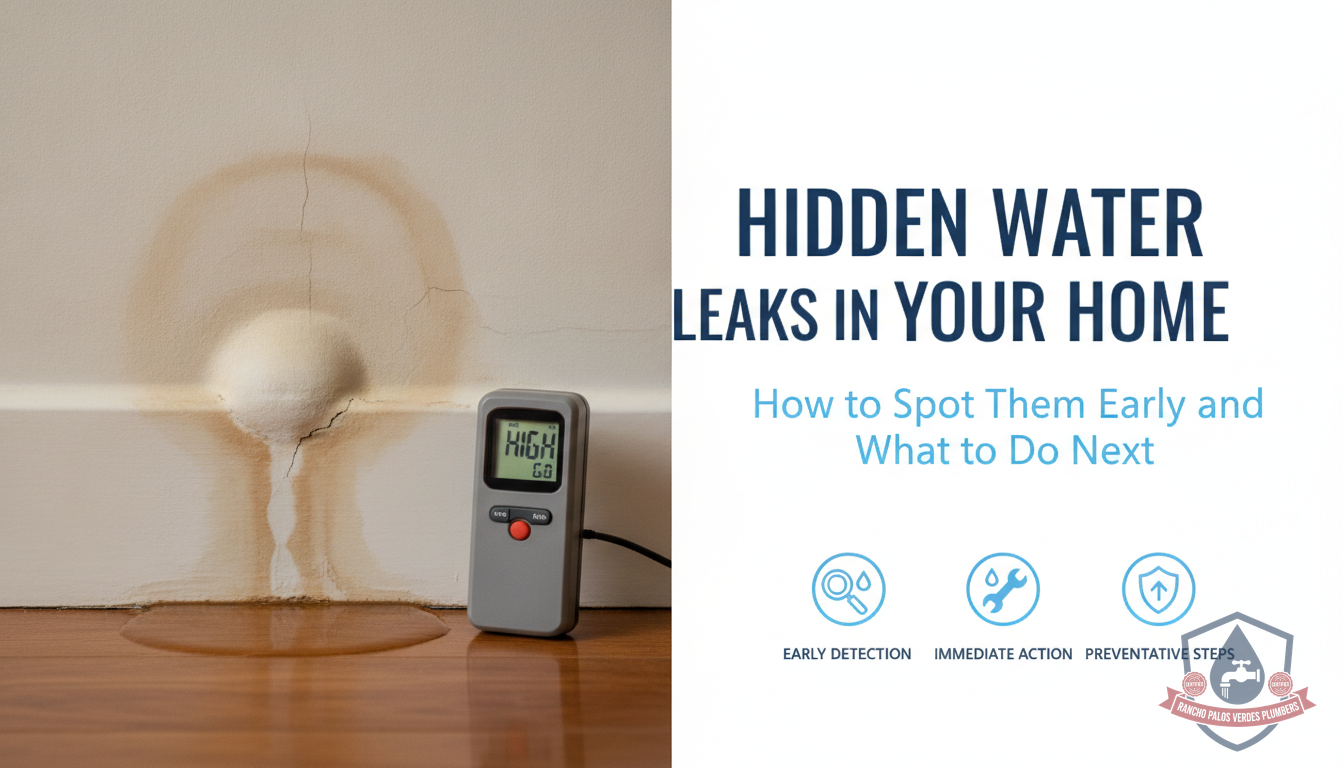
- Discoloration or bubbling on walls and ceilings: Brown water stains, paint that bubbles or peels away from drywall, or a ceiling that develops a soft spot are all signs of moisture accumulation from a nearby pipe leak.
- Mold or musty odors: Mold grows within 24–48 hours of a water intrusion event in the right conditions. A persistent musty smell in a bathroom, under a sink cabinet, or in a closet that backs up to a wet wall is a red flag that should prompt an immediate inspection.
- Low water pressure at fixtures: A sudden unexplained drop in water pressure at a specific fixture or throughout the home can indicate that water is escaping the supply line before it reaches the tap.
- Foundation cracks or floor heaving: In slab leak scenarios, sustained water release beneath a foundation can soften the soil and cause cracking or uneven settling — a more advanced and expensive problem if the leak has been active for a long time.
- Wet spots or efflorescence on exterior walls: White chalky mineral deposits or damp patches on exterior block or stucco walls can indicate a slow leak in a supply or drain line running through or adjacent to the wall.
What Professional Leak Detection Involves
The technology available to professional plumbers for non-invasive leak detection has improved significantly in recent years. At Rancho Palos Verdes Plumbers, our leak detection process typically involves:
- Acoustic listening devices: Sensitive ground microphones amplify the sound of water escaping pressurized pipes through concrete slabs, soil, and walls. By moving the sensor systematically along a suspected line, our technicians can pinpoint the leak location to within a few inches — dramatically reducing the amount of material that needs to be opened to access the pipe.
- Moisture meters: Probes inserted into drywall or scanned across flooring measure moisture content at multiple points, creating a map of where elevated moisture is concentrated and guiding access decisions.
- Pressure testing: After isolating sections of the supply system, we can pressure-test individual runs to confirm where a leak exists and verify the repair is holding after work is complete.
The goal of every leak detection call is to locate the problem with the least possible disruption to your home before any cutting or drilling begins. We walk you through the findings and the proposed access plan before any walls or floors are opened.
Repair Options: From Spot Repairs to Re-Routing
Once a leak is located, the appropriate repair depends on several factors: pipe material, the age and overall condition of the line, how accessible the failure point is, and whether there are additional failure points along the same run.
- Spot repair: For a single isolated pinhole or joint failure on a line that is otherwise in good condition, a targeted coupling replacement or re-solder is the fastest and most economical solution.
- Section re-routing: When a run of pipe has multiple failure points — common in older copper lines with widespread pinhole corrosion — re-routing the section through a more accessible path avoids repeated repairs on the same failing pipe.
- Slab leak repair: Depending on depth and location, slab leak repair may involve tunneling beneath the slab, breaking a small access opening in the concrete, or re-routing the affected line through the walls above slab level. We discuss all options and their relative costs with you before any work begins.
After completing any leak repair, we pressure-test the repaired section and verify flow and pressure at affected fixtures before closing up walls, reinstating full water service, and completing the job.
Act Quickly — Time Is Not on Your Side With a Hidden Leak
The longer a hidden leak runs, the more damage it causes and the more expensive the total cost of resolution becomes. A pipe repair that costs a few hundred dollars today may cost several times that amount in six months if the resulting water damage requires drywall removal, subfloor replacement, or mold remediation.
Rancho Palos Verdes Plumbers serves homeowners throughout the Palos Verdes Peninsula and nearby communities including Rolling Hills Estates, San Pedro, Harbor City, and